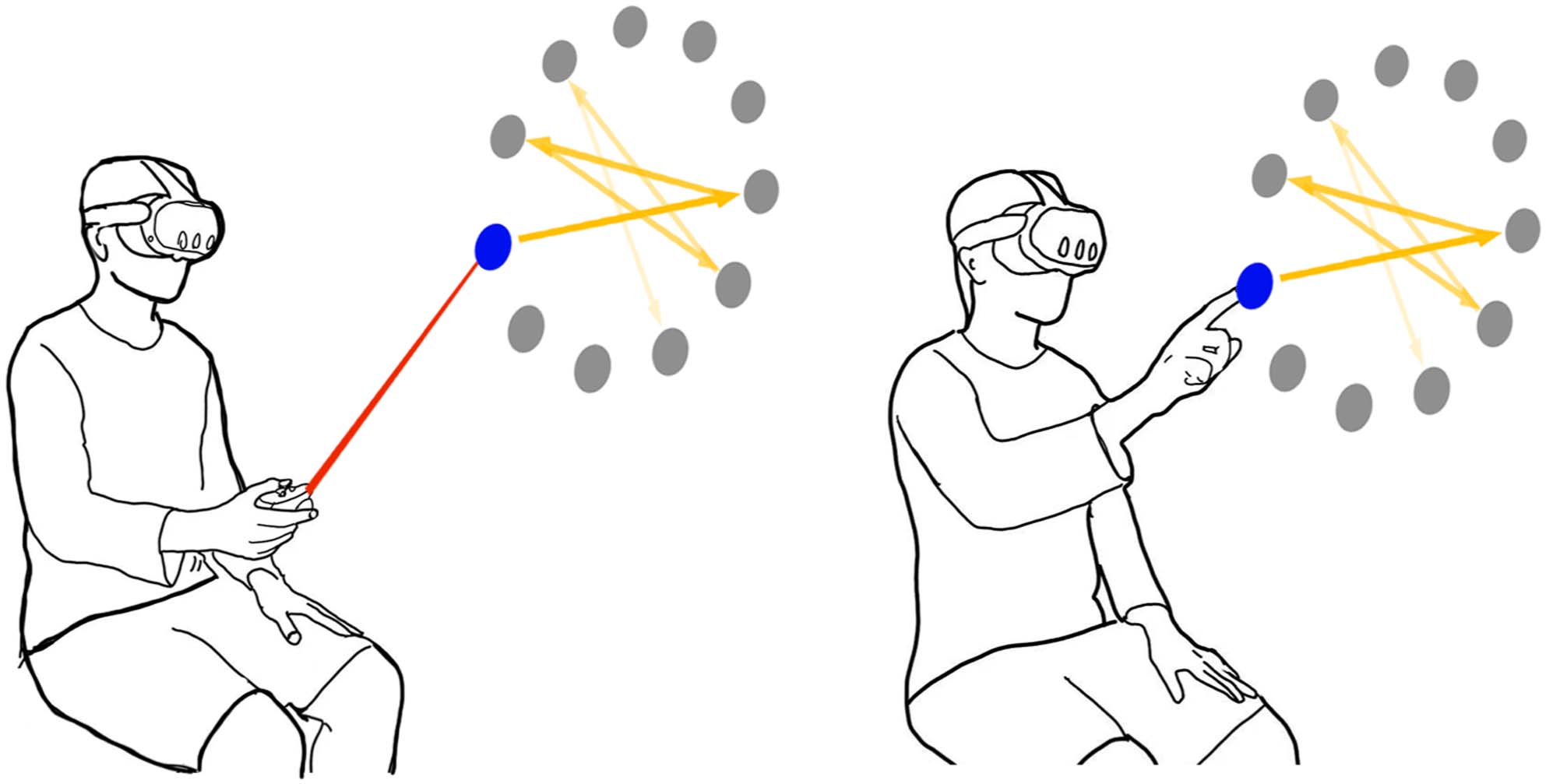
Understanding the Effect of Latency on User Performance of Target Selection in Virtual Reality
Yushi Wei, Rongkai Shi, Kemu Xu, Jialin Wang, BoYu Gao, Pan Hui, Lingyun Yu, Hai-Ning Liang
IEEE TVCG: IEEE Transactions on Visualization and Computer Graphics, 2026
@ARTICLE{Wei:2026:UEL,
author={Wei, Yushi and Shi, Rongkai and Xu, Kemu and Wang, Jialin and Gao, BoYu and Hui, Pan and Yu, Lingyun and Liang, Hai-Ning},
journal={IEEE Transactions on Visualization and Computer Graphics},
title={Understanding the Effect of Latency on User Performance of Target Selection in Virtual Reality},
year={2026},
volume={32},
number={2},
pages={2200-2215},
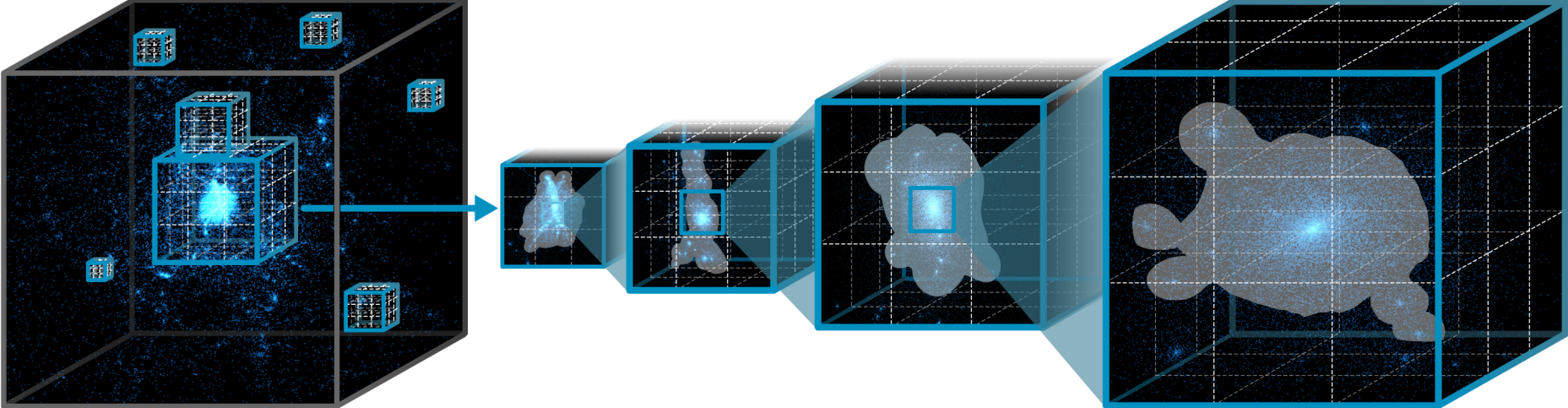
doi={10.1109/TVCG.2025.3634367}} ScaleFree: Dynamic KDE for Multiscale Point Cloud Exploration in VR
Lixiang Zhao, Fuqi Xie, Tobias Isenberg, Hai-Ning Liang, and Lingyun Yu.
IEEE VR: IEEE Conference on Virtual Reality and 3D User Interfaces, 2026
@inproceedings{Zhao:2026:SDK,
author = {Lixiang Zhao and Fuqi Xie and Tobias Isenberg and Hai-Ning Liang and Lingyun Yu},
title = {{ScaleFree}: Dynamic {KDE} for Multiscale Point Cloud Exploration in {VR}},
booktitle = {Proceedings of the IEEE Conference Virtual Reality and 3D User Interfaces (VR, March 21--25, Daegu, Korea)},
year = {2026},
pages = {358--368},
publisher = {IEEE Computer Society},
address = {Los Alamitos},
doi = {10.1109/VR67842.2026.00057},
shortdoi = {10/q5h7},
doi_url = {https://doi.org/10.1109/VR67842.2026.00057},
oa_hal_url = {https://hal.science/hal-05611962},
preprint = {https://doi.org/10.48550/arXiv.2601.20758},
osf_url = {https://osf.io/hfu6e},
url = {https://tobias.isenberg.cc/p/Zhao2026SDK},
github_url = {https://github.com/LixiangZhao98/ScaleFree},
pdf = {https://tobias.isenberg.cc/personal/papers/Zhao_2026_SDK.pdf},
video = {https://youtu.be/H-dz_4UXMIE},
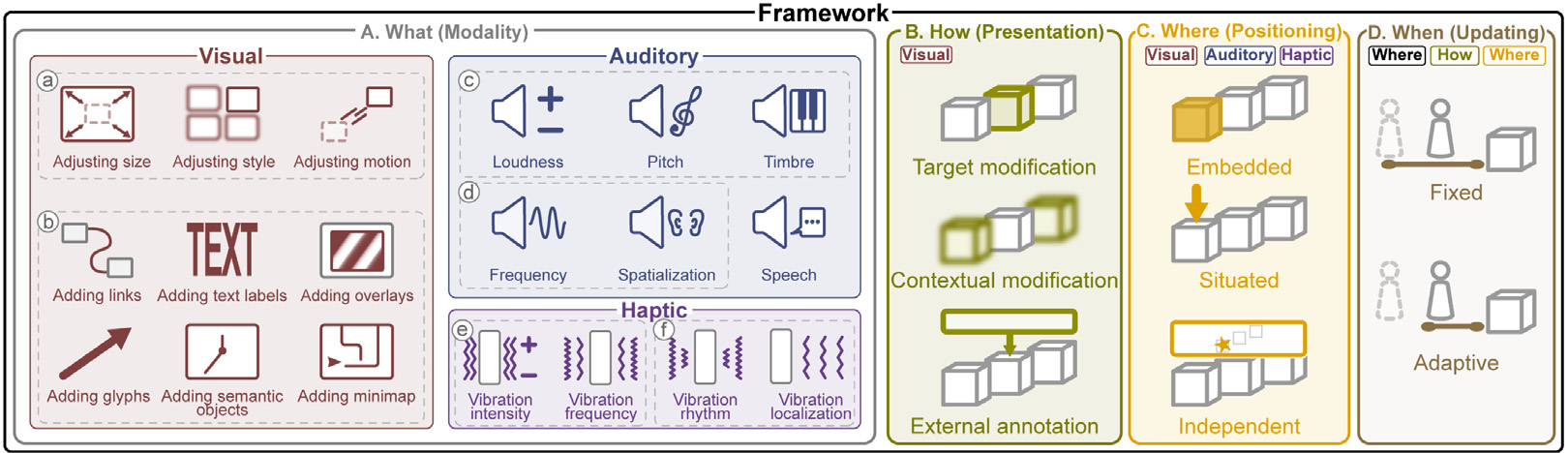
} A study on attention guidance in AR for target localization
Fuqi Xie, Luyan Jiang, Siqi Xie, Qianru Liu, Hai-Ning Liang, Lingyun Yu
Visual Informatics, 2026
@article{Xie:2026:ASA,
title = {A study on attention guidance in AR for target localization},
journal = {Visual Informatics},
volume = {10},
number = {3},
pages = {100309},
year = {2026},
issn = {2468-502X},
doi = {https://doi.org/10.1016/j.visinf.2026.100309},
url = {https://www.sciencedirect.com/science/article/pii/S2468502X26000057},
author = {Fuqi Xie and Luyan Jiang and Siqi Xie and Qianru Liu and Hai-Ning Liang and Lingyun Yu},
keywords = {Attention guidance, Visual cues, Auditory cues, Haptic cues, Augmented reality}} Exploring and Modeling Directional Effects on Steering Behavior in Virtual Reality
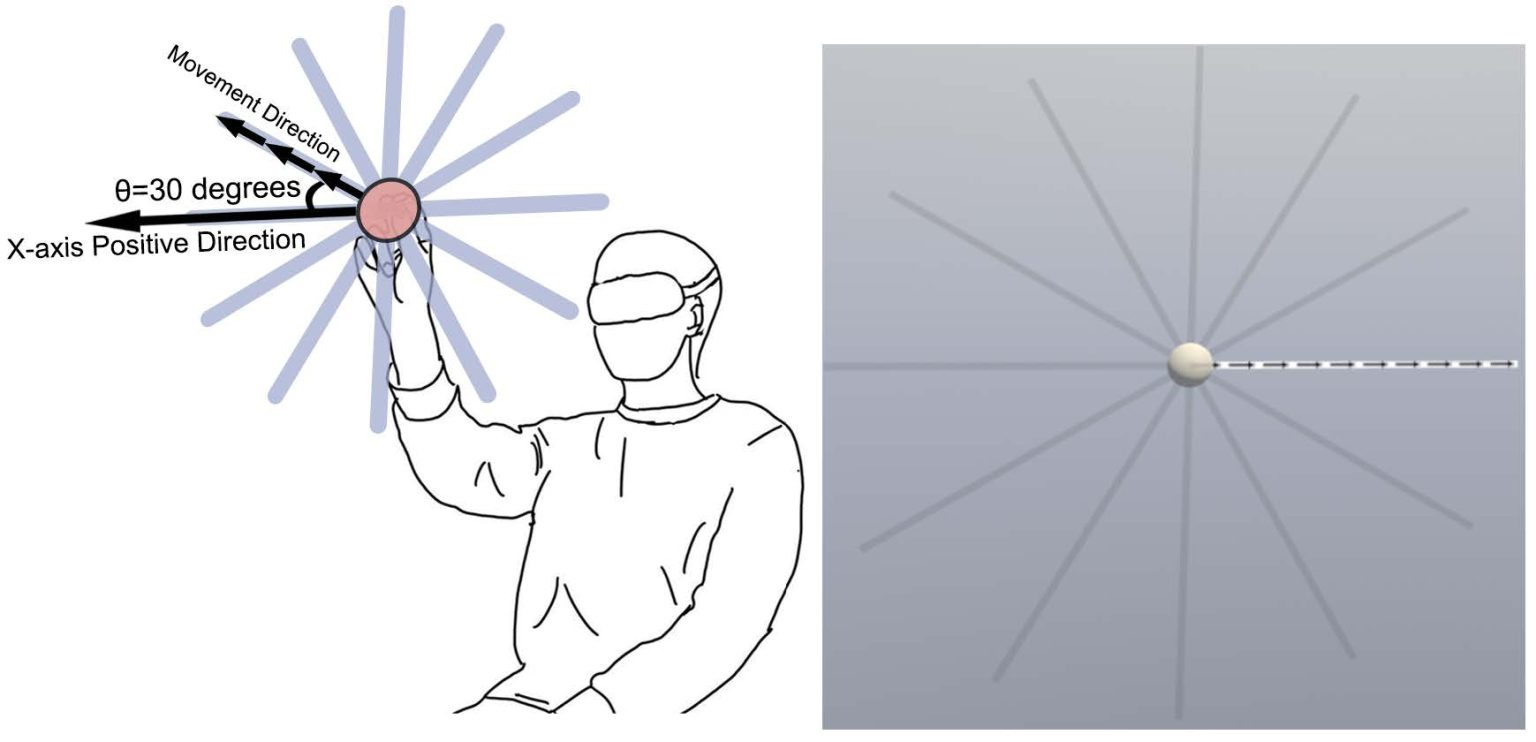
Yushi Wei, Kemu Xu, Yue Li, Lingyun Yu, Hai-Ning Liang
IEEE ISMAR: IEEE Transactions on Visualization and Computer Graphics, 2025
@ARTICLE{10670419,
author={Wei, Yushi and Xu, Kemu and Li, Yue and Yu, Lingyun and Liang, Hai-Ning},
journal={IEEE Transactions on Visualization and Computer Graphics},
title={Exploring and Modeling Directional Effects on Steering Behavior in Virtual Reality},
year={2024},
volume={30},
number={11},
pages={7107-7117},
keywords={Three-dimensional displays;Solid modeling;Predictive models;Computational modeling;Mathematical models;Performance evaluation;Muscles;Virtual reality;human performance modeling;steering law;barehand interaction;head-mounted display},
doi={10.1109/TVCG.2024.3456166}}
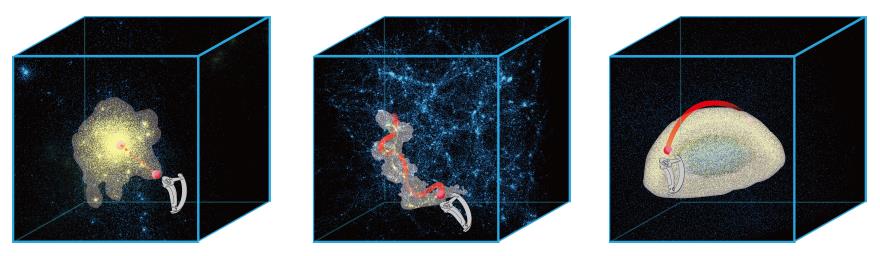
MeTACAST: Target- and Context-aware Spatial Selection in VR
Lixiang Zhao, Tobias Isenberg, Fuqi Xie, Hai-Ning. Liang, Lingyun Yu
IEEE VIS: IEEE Transactions on Visualization and Computer Graphics, 2024
@ARTICLE{10292508,
author={Zhao, Lixiang and Isenberg, Tobias and Xie, Fuqi and Liang, Hai-Ning and Yu, Lingyun},
journal={IEEE Transactions on Visualization and Computer Graphics},
title={MeTACAST: Target- and Context-Aware Spatial Selection in VR},
year={2024},
volume={30},
number={1},
pages={480-494},
keywords={Three-dimensional displays;Shape;Density measurement;Volume measurement;Data visualization;Particle measurements;Spatial databases;Spatial selection;immersive analytics;virtual reality (VR);target-aware and context-aware interaction for visualization},
doi={10.1109/TVCG.2023.3326517}}
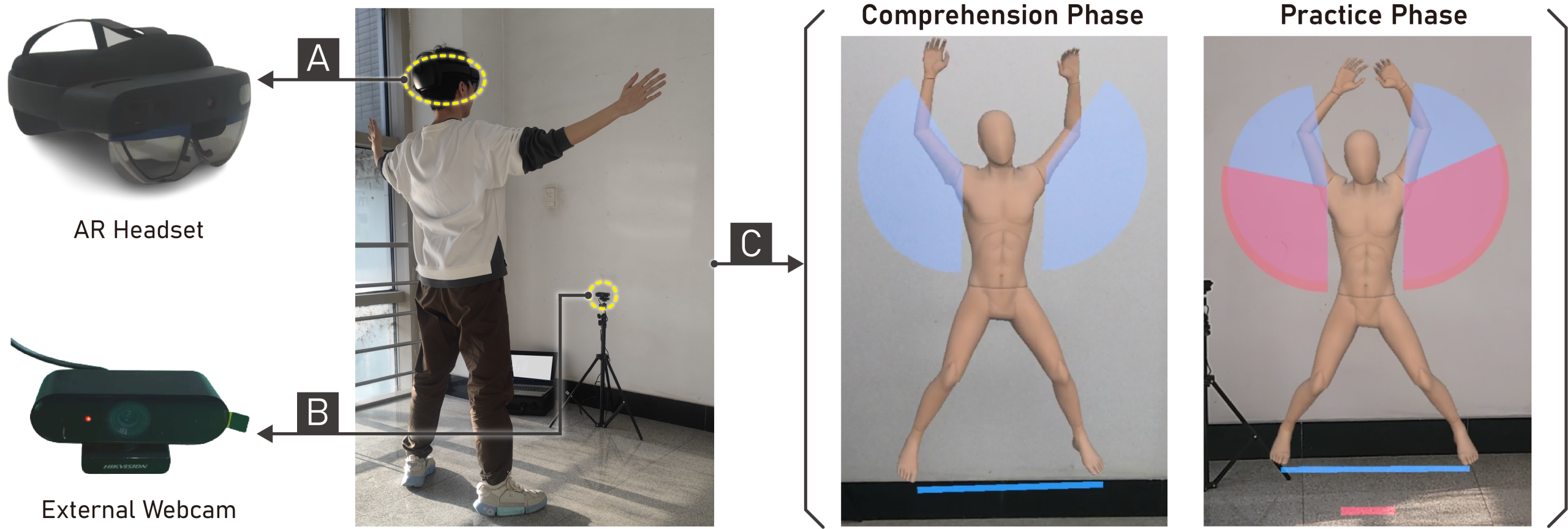
AR-Enhanced Workouts: Exploring Visual Cues for At-Home Workout Videos in AR Environment
Yihong Wu, Lingyun Yu, Jie Xu, Dazhen Deng, Jiachen Wang, Xie Xiao, Hui Zhang, Yingcai Wu
ACM UIST: ACM Symposium on User Interface Software and Technology, 2023
@inproceedings{10.1145/3586183.3606796,
author = {Wu, Yihong and Yu, Lingyun and Xu, Jie and Deng, Dazhen and Wang, Jiachen and Xie, Xiao and Zhang, Hui and Wu, Yingcai},
title = {AR-Enhanced Workouts: Exploring Visual Cues for At-Home Workout Videos in AR Environment},
year = {2023},
isbn = {9798400701320},
publisher = {Association for Computing Machinery},
address = {New York, NY, USA},
url = {https://doi.org/10.1145/3586183.3606796},
doi = {10.1145/3586183.3606796},
abstract = {In recent years, with growing health consciousness, at-home workout has become increasingly popular for its convenience and safety. Most people choose to follow video guidance during exercising. However, our preliminary study revealed that fitness-minded people face challenges when watching exercise videos on handheld devices or fixed monitors, such as limited movement comprehension due to static camera angles and insufficient feedback. To address these issues, we reviewed popular workout videos, identified user requirements, and came up with an augmented reality (AR) solution. Following a user-centered iterative design process, we proposed a design space of AR visual cues for workouts and implemented an AR-based application. Specifically, we captured users’ exercise performance with pose-tracking technology and provided feedback via AR visual cues. Two user experiments showed that incorporating AR visual cues could improve movement comprehension and enable users to adjust their movements based on real-time feedback. Finally, we presented several suggestions to inspire future design and apply AR visual cues to sports training.},
booktitle = {Proceedings of the 36th Annual ACM Symposium on User Interface Software and Technology},
articleno = {121},
numpages = {15},
keywords = {SportsXR, argumented reality, movement learning},
location = {San Francisco, CA, USA},
series = {UIST '23}
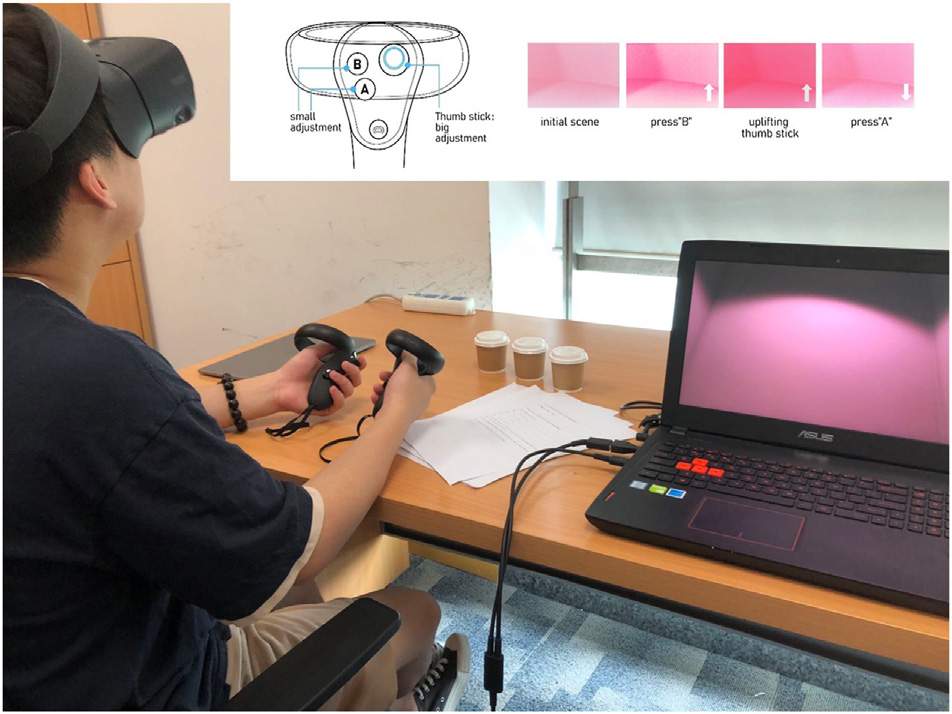
} Examining Cross-Modal Correspondence between Ambient Color and Taste Perception in Virtual Reality
Zhen Wu, Rongkai Shi, Ziming Li, Mengjie Jiang, Yue Li, Lingyun Yu, Hai-Ning Liang
Frontiers in Virtual Reality, 2022
@article{wu2022examining,
title={Examining cross-modal correspondence between ambient color and taste perception in virtual reality},
author={Wu, Zhen and Shi, Rongkai and Li, Ziming and Jiang, Mengqi and Li, Yue and Yu, Lingyun and Liang, Hai-Ning},
journal={Frontiers in Virtual Reality},
volume={3},
pages={1056782},
year={2022},
publisher={Frontiers Media SA}
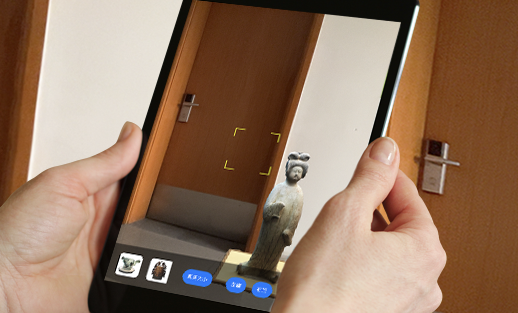
} User Retention of Mobile Augmented Reality for Cultural Heritage Learning
Ningning Xu, Yue Li, Jie Lin, Lingyun Yu, and Hai-Ning Liang
IEEE International Symposium on Mixed and Augmented Reality Adjunct (ISMAR-Adjunct), 2022
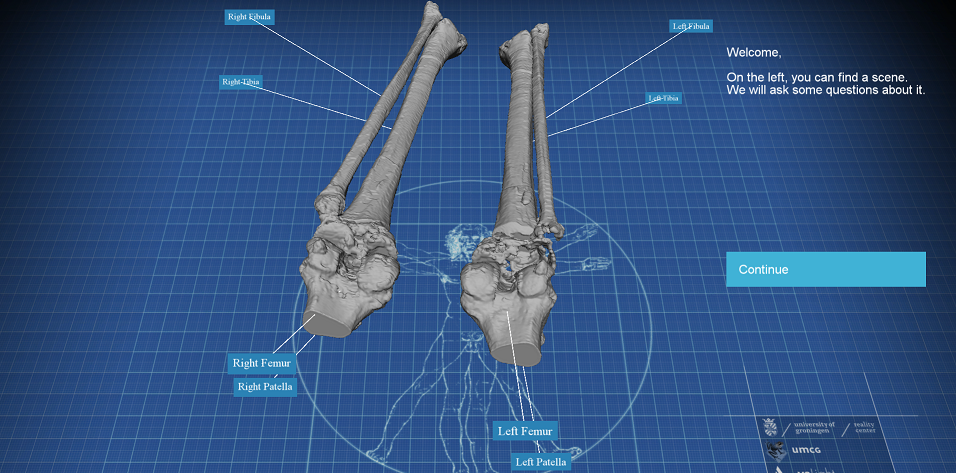
@INPROCEEDINGS{9974472,
author={Xu, Ningning and Li, Yue and Lin, Jie and Yu, Lingyun and Liang, Hai-Ning},
booktitle={2022 IEEE International Symposium on Mixed and Augmented Reality Adjunct (ISMAR-Adjunct)},
title={User Retention of Mobile Augmented Reality for Cultural Heritage Learning},
year={2022},
volume={},
number={},
pages={447-452},
keywords={Visualization;Solid modeling;Three-dimensional displays;Mathematical models;Museums;Cultural differences;History;augmented reality;mobile AR;user retention;cultural heritage;learning;Human-centered computing;Human computer interaction (HCI);Interaction paradigms;Mixed/augmented reality},
doi={10.1109/ISMAR-Adjunct57072.2022.00095}}
VeLight: A 3D Virtual Reality Tool for CT-based Anatomy Teaching and Training
Lingyun Yu, Joost Ouwerling, Pjotr Svetachov, Frans h. j. v. Hoesel, Peter M. A. v. Ooijen, Jiri Kosinka
ChinaVis: Journal of Visualization, 2021
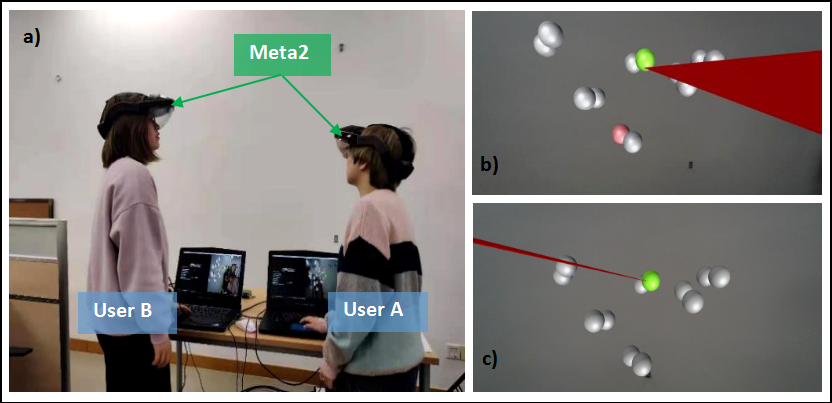
@article{yu2022velight,
title={VeLight: A 3D virtual reality tool for CT-based anatomy teaching and training},
author={Yu, Lingyun and Ouwerling, Joost and Svetachov, Pjotr and van Hoesel, Frans HJ and van Ooijen, Peter MA and Kosinka, Jiri},
journal={Journal of Visualization},
volume={25},
number={2},
pages={293--306},
year={2022},
publisher={Springer}
} Effect of Visual Cues on Pointing Tasks in Co-located Augmented Reality Symposium on Spatial User Interaction
Lei Chen, Yilin Liu, Yue Li, Lingyun Yu, BoYu Gao, Maurizio Caon, Yong Yue, Hai-Ning Liang
SUI: Proceedings of the 2021 ACM Symposium on Spatial User Interaction, 2021
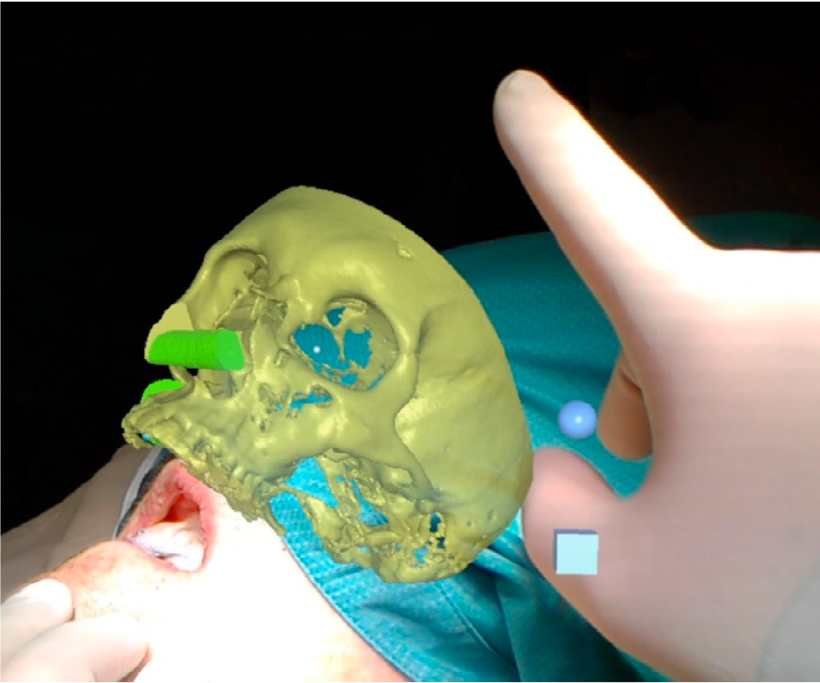
@inproceedings{10.1145/3485279.3485297,
author = {Chen, Lei and Liu, Yilin and Li, Yue and Yu, Lingyun and Gao, BoYu and Caon, Maurizio and Yue, Yong and Liang, Hai-Ning},
title = {Effect of Visual Cues on Pointing Tasks in Co-located Augmented Reality Collaboration},
year = {2021},
isbn = {9781450390910},
publisher = {Association for Computing Machinery},
address = {New York, NY, USA},
url = {https://doi.org/10.1145/3485279.3485297},
doi = {10.1145/3485279.3485297},
abstract = {Visual cues are essential in computer-mediated communication. It is especially important when communication happens in a collaboration scenario that requires focusing several users’ attention on a specific object among other similar ones. This paper explores the effect of visual cues on pointing tasks in co-located Augmented Reality (AR) collaboration. A user study (N = 32, 16 pairs) was conducted to compare two types of visual cues: Pointing Line (PL) and Moving Track (MT). Both are head-based visual techniques. Through a series of collaborative pointing tasks on objects with different states (static and dynamic) and density levels (low, medium and high), the results showed that PL was better on task performance and usability, but MT was rated higher on social presence and user preference. Based on our results, some design implications are provided for pointing tasks in co-located AR collaboration.},
booktitle = {Proceedings of the 2021 ACM Symposium on Spatial User Interaction},
articleno = {12},
numpages = {12},
keywords = {Visual cues, Pointing Tasks, Co-located collaboration, Augmented Reality},
location = {Virtual Event, USA},
series = {SUI '21}
} Augmented reality visualization for image-guided surgery: a validation study using a three-dimensional printed phantom
Haye Glas, Joep Kraeima, Peter M.A. van Ooijen, Frederik. Spijkervet, Lingyun Yu, Max Witjes
Journal of Oral and Maxillofacial Surgery, 2021
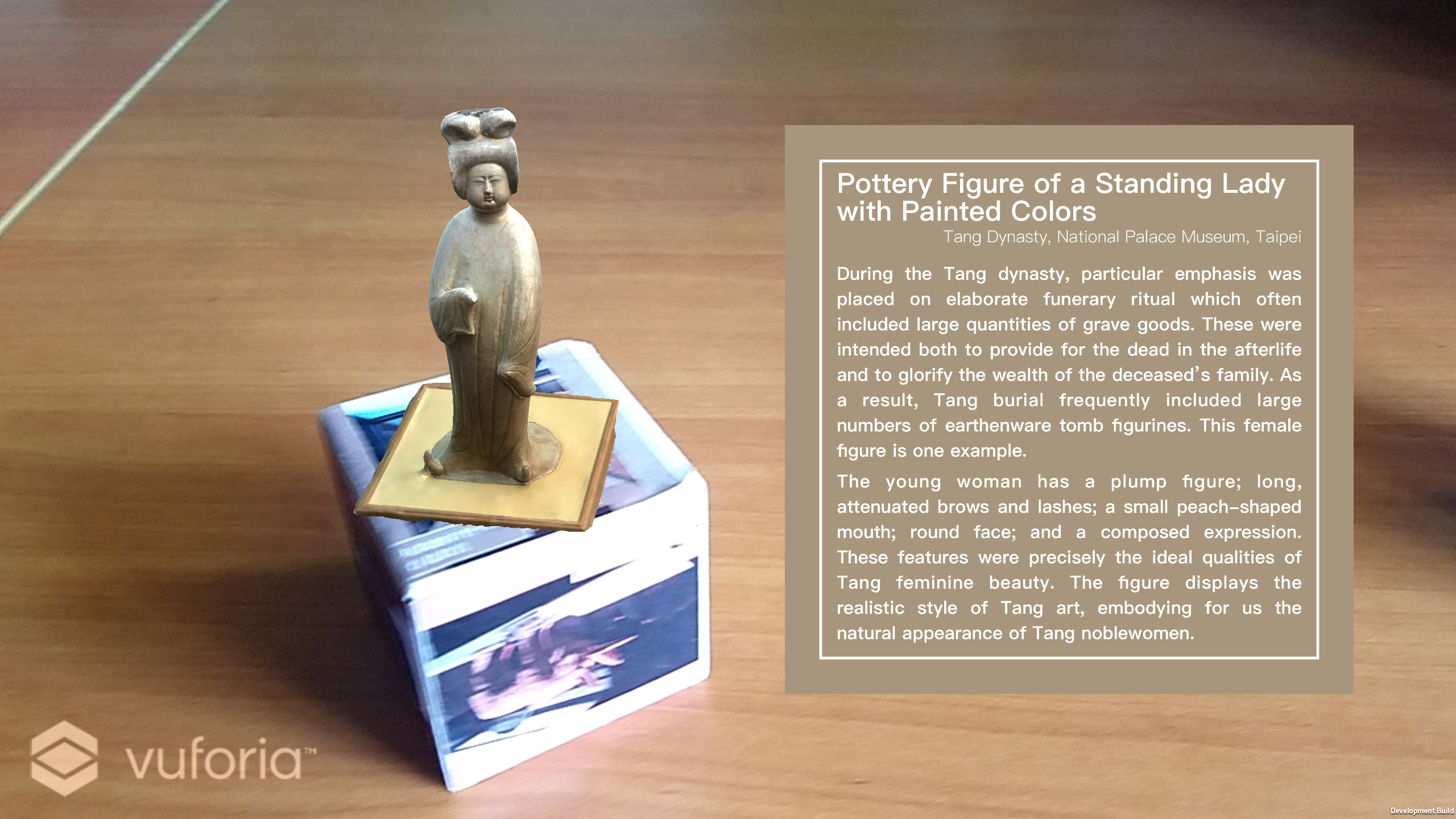
@article{GLAS20211943.e1,
title = {Augmented Reality Visualization for Image-Guided Surgery: A Validation Study Using a Three-Dimensional Printed Phantom},
journal = {Journal of Oral and Maxillofacial Surgery},
volume = {79},
number = {9},
pages = {1943.e1-1943.e10},
year = {2021},
issn = {0278-2391},
doi = {https://doi.org/10.1016/j.joms.2021.04.001},
url = {https://www.sciencedirect.com/science/article/pii/S0278239121003220},
author = {H.H. Glas and J. Kraeima and P.M.A. {van Ooijen} and F.K.L. Spijkervet and L. Yu and M.J.H. Witjes},
abstract = {Background
Oral and maxillofacial surgery currently relies on virtual surgery planning based on image data (CT, MRI). Three-dimensional (3D) visualizations are typically used to plan and predict the outcome of complex surgical procedures. To translate the virtual surgical plan to the operating room, it is either converted into physical 3D-printed guides or directly translated using real-time navigation systems.
Purpose
This study aims to improve the translation of the virtual surgery plan to a surgical procedure, such as oncologic or trauma surgery, in terms of accuracy and speed. Here we report an augmented reality visualization technique for image-guided surgery. It describes how surgeons can visualize and interact with the virtual surgery plan and navigation data while in the operating room. The user friendliness and usability is objectified by a formal user study that compared our augmented reality assisted technique to the gold standard setup of a perioperative navigation system (Brainlab). Moreover, accuracy of typical navigation tasks as reaching landmarks and following trajectories is compared.
Results
Overall completion time of navigation tasks was 1.71 times faster using augmented reality (P = .034). Accuracy improved significantly using augmented reality (P < .001), for reaching physical landmarks a less strong correlation was found (P = .087). Although the participants were relatively unfamiliar with VR/AR (rated 2.25/5) and gesture-based interaction (rated 2/5), they reported that navigation tasks become easier to perform using augmented reality (difficulty Brainlab rated 3.25/5, HoloLens 2.4/5).
Conclusion
The proposed workflow can be used in a wide range of image-guided surgery procedures as an addition to existing verified image guidance systems. Results of this user study imply that our technique enables typical navigation tasks to be performed faster and more accurately compared to the current gold standard. In addition, qualitative feedback on our augmented reality assisted technique was more positive compared to the standard setup.?>}
} CubeMuseum: An Augmented Reality Prototype of Embodied Virtual Museum
Yue Li, Lingyun Yu, Hai-Ning Liang
ISMAR: International Symposium on Mixed and Augmented Reality, 2021
@INPROCEEDINGS{9585869,
author={Li, Yue and Yu, Lingyun and Liang, Hai-Ning},
booktitle={2021 IEEE International Symposium on Mixed and Augmented Reality Adjunct (ISMAR-Adjunct)},
title={CubeMuseum: An Augmented Reality Prototype of Embodied Virtual Museum},
year={2021},
volume={},
number={},
pages={13-17},
keywords={Visualization;Three-dimensional displays;Prototypes;User experience;Mobile handsets;Trajectory;Cultural differences;human-computer interaction;cultural heritage;digital heritage;virtual museum;augmented reality;mixed reality;embodied interaction},
doi={10.1109/ISMAR-Adjunct54149.2021.00014}}